Debt cannot buy a person
An advance is a loan, not a claim on someone’s freedom of movement. Where that line is crossed, the response is immediate, routine and does not depend on an NGO being nearby.
Our vision
We are working toward a country where our own intervention is no longer necessary — where protection is routine rather than exceptional.
What success looks like
Most organisations describe growth as success. For us, a district where bonded labour is detected and resolved by the administration without our involvement is a better outcome than a district where we run more rescues each year.
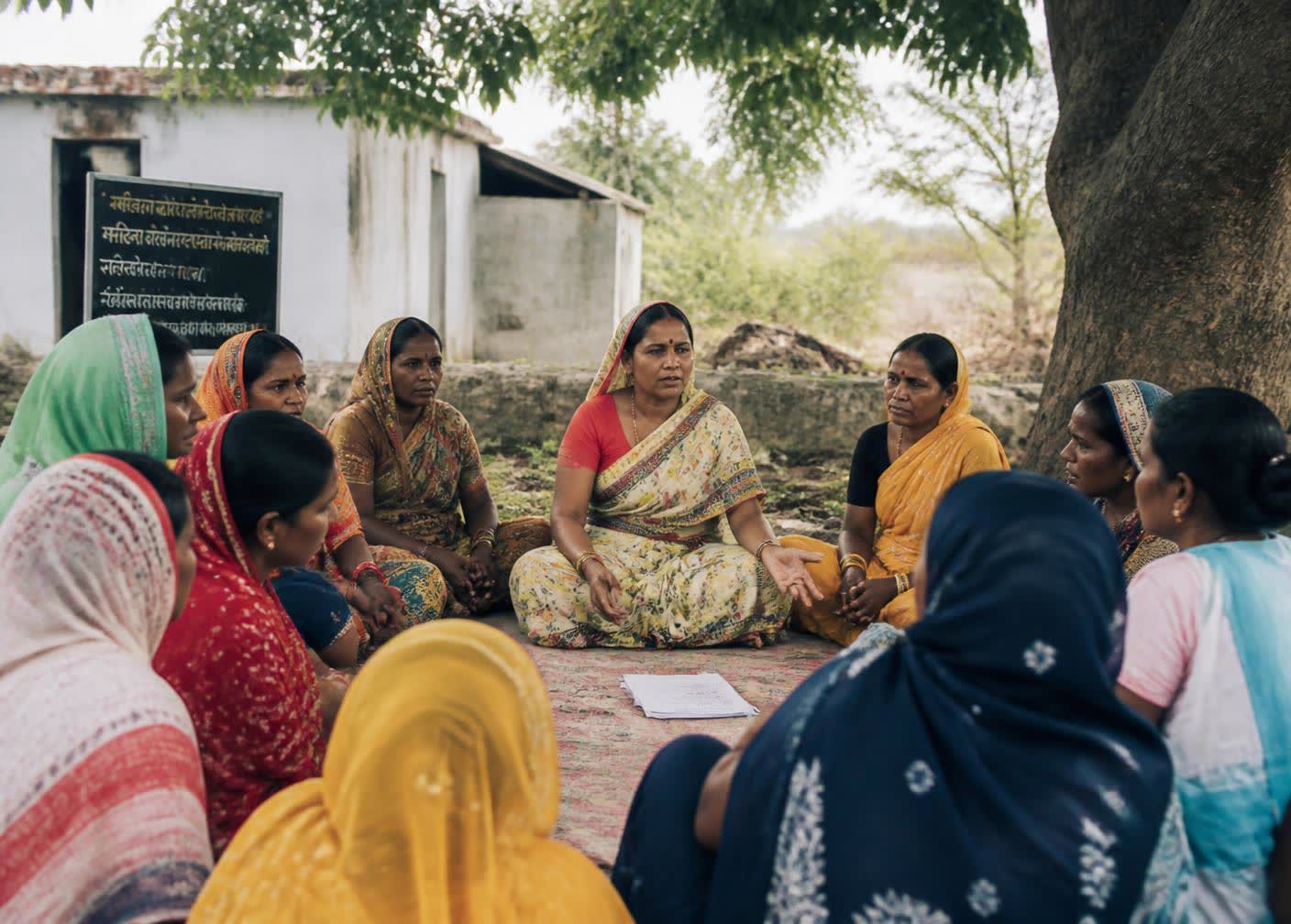
That reframes what we build. Not a permanent service, but capability we hand over — trained paralegals who stay in their own communities, committees that negotiate without us, and documentation robust enough that a labour officer can act on it directly.
The India we are working toward
Not abstractions — each is a testable state of affairs that either holds in a district or does not.
An advance is a loan, not a claim on someone’s freedom of movement. Where that line is crossed, the response is immediate, routine and does not depend on an NGO being nearby.
e-Shram, pensions, rations and compensation reach informal workers by default — not only those who happen to meet someone who knows the process.
Workers move between states for opportunity, carrying portable rights and documentation, rather than being recruited into debt at the source village.
Children of kiln, quarry and farm workers are in school, and the family’s obligations never become theirs to work off.
Domestic, agricultural and home-based work — overwhelmingly done by women — is recognised as employment, with the wages and protections that follow.
Informal work is documented well enough that policy can see it. What is not counted is not governed.
How we get there
Each depends on the one before it. There is no route that skips the casework.
Today a rescue often depends on our field team noticing. The goal is district systems that detect and act without us — with our role shifting to verification and support.
Each recovered wage claim and release certificate builds a record. Enough records make a pattern, and patterns are what change a labour department’s standing instructions.
Worker committees we help form should outlast our involvement, negotiate independently, and be recognised by employers and administrations as counterparties.
The end state is a worker who knows their entitlement, has the documents to claim it, and does not need an intermediary at all.
Rescue is measured in days, rehabilitation in years, and a change in how a district behaves in decades. We plan for all three at once.
Regular giving funds the parts of this work that do not fit a project cycle.