Identification
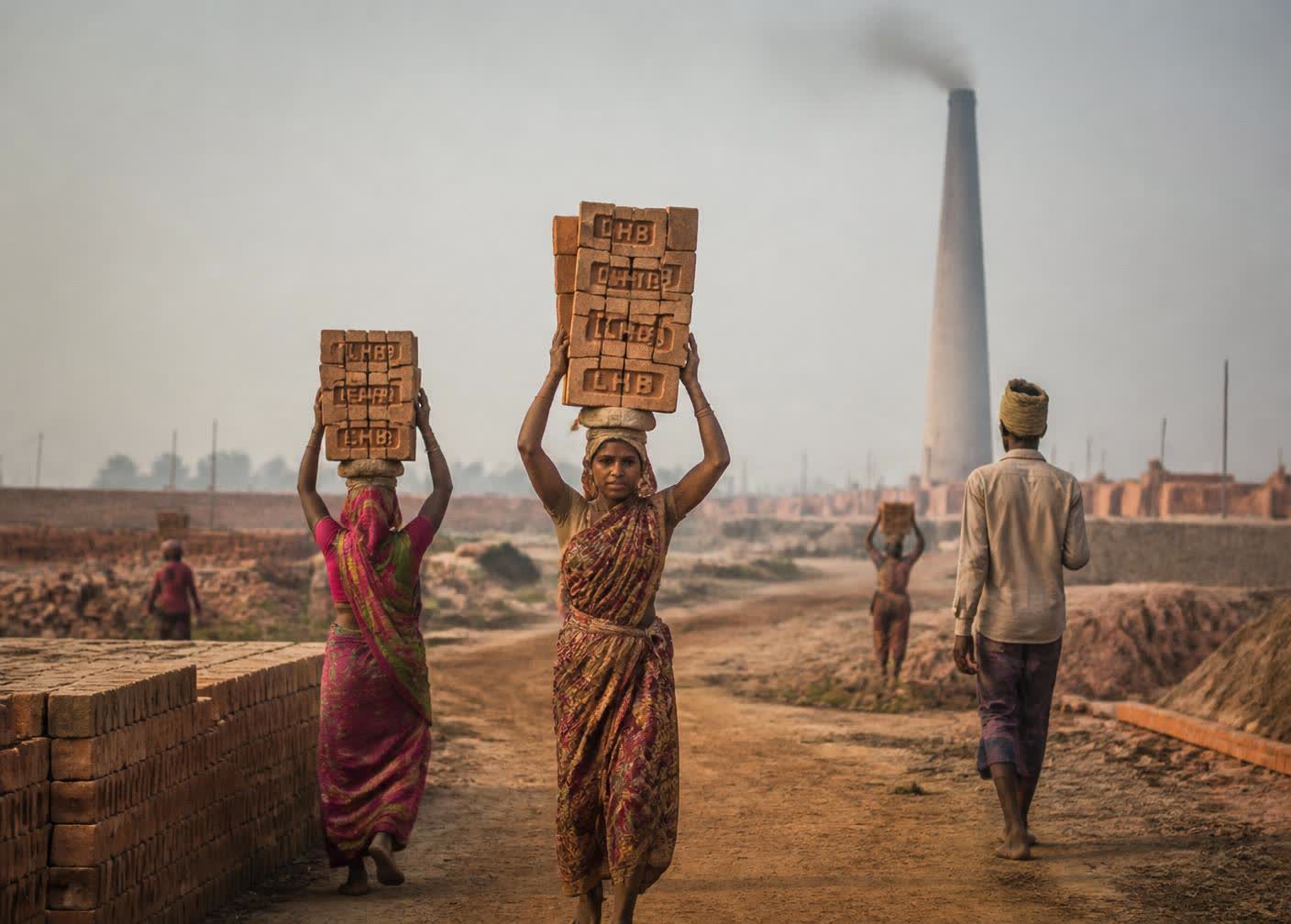
Community outreach across kiln, quarry, farm and small manufacturing clusters to find workers held under debt bondage, working through local networks and the communities themselves.
Direct Intervention · Justice
Identification, case registration, rescue and statutory rehabilitation of workers held in debt bondage — a practice outlawed in India since 1976.
20,664
Forced and bonded labourers rescued
15
States of operation
945
Pending cases
₹30,000
Statutory immediate assistance
Context
Bonded labour constitutes a form of modern slavery. India outlawed this practice in 1976 through the Bonded Labour System (Abolition) Act. Under the legislation, bonded labour is defined as “a forced labour system in which a borrower agrees to work for the lender without wages for a fixed or indefinite period in exchange for a loan”. This arrangement may persist across generations.
Forced labour encompasses situations where individuals are pressured into work through violence, threats, accumulated debt, document confiscation, or denunciation threats.
According to Arjun Sengupta’s research, India has approximately 423 million workers: 395 million in unorganised sectors and 28 million in organised sectors. The Global Slavery Index identifies 24 million forced labourers in India, including 18 million bonded labourers. Government figures estimate 300,000 bonded labourers, while other assessments suggest 65 million forced and bonded labourers, including 5 million children.
How we work
Community outreach across kiln, quarry, farm and small manufacturing clusters to find workers held under debt bondage, working through local networks and the communities themselves.
Engagement with government authorities to formally register the case — the step that obliges the district administration to act and starts the statutory clock.
Participation in rescue teams alongside the district administration and police, securing the immediate safety of workers and their families.
Legal assistance for repatriation and compensation under the Central Sector Scheme for Rehabilitation of Bonded Labourers, 2021, which provides immediate financial assistance of ₹30,000 following the February 2022 revision.
Methodology
Community outreach locates workers held in bondage.
The case is registered with the relevant government authority.
Rescue conducted with the district administration and police.
Repatriation, compensation claims and legal aid under the Central Scheme.
Case studies
Documented cases, with the dates and outcomes as recorded.
Bhutta village, Ludhiana, Punjab
Migrant workers from Dalit communities across Uttar Pradesh were trafficked to Ludhiana by an agent, Pramod Kumar, to work at the Lekhram Sood & Co. brick kiln for almost two years in bondage conditions.
They were promised ₹912 per 1,000 bricks. Parvinder’s family made 357,000 bricks, Satender’s 347,000, Harkesh’s 375,000 and Ravi’s 210,100. None of them received any wages.
Workers lived in houses without washrooms and drew water from a tubewell. The owner controlled food distribution and medical care, restricted their movement, and did not allow them to seek alternative employment.
StatusWorkers were repatriated to Muzaffarnagar. Police recorded only the men’s statements, excluding women and children despite their participation. Mehnatkash Association has requested interim compensation and an investigation, with potential High Court escalation pending.
Dwarka, Delhi
Rehana Begum, a jhuggi resident, was trapped in bonded labour through a ₹5,000 advance from a contractor who promised sanitation work. From 2014 she was forced to work long hours without a regular salary or adequate equipment at a Delhi Development Authority toilet facility.
Status₹20,000 interim compensation was granted. Rehana had received only partial compensation while facing continued harassment from her former employer despite the court’s directions.
Outcomes
Legal basis
Questions
The Bonded Labour System (Abolition) Act, 1976 defines it as a forced labour system in which a borrower agrees to work for the lender without wages, for a fixed or indefinite period, in exchange for a loan. The arrangement can pass across generations.
Under the Central Sector Scheme for Rehabilitation of Bonded Labourers, 2021 — revised in February 2022 — rescued bonded labourers receive immediate financial assistance of ₹30,000, alongside the wider rehabilitation package.
20,664 forced and bonded labourers have been rescued, with 945 cases currently pending across quasi-judicial and administrative forums.
Related
Advocacy and rehabilitation for unorganised-sector workers, migrant labourers, bonded labourers, trafficking survivors and homeless destitute labourers denied adequate housing.
Read moreMobilisation, advocacy, capacity building and legal aid for platform-based workers left in regulatory limbo by India’s labour codes.
Read moreAwareness, outreach, rehabilitation, legal aid and social support for workers who leave home to find employment in other regions.
Read moreReports can be anonymous. Every case above began with someone deciding to speak.